
One of the most common questions I hear is:
“I’ve been saving… but can I actually retire before 67?”
Today’s case study looks at a real-world scenario many single professionals face — steady income, modest savings, a home with equity, and a lot of uncertainty about timing.
Let’s walk through it.
Meet Patricia
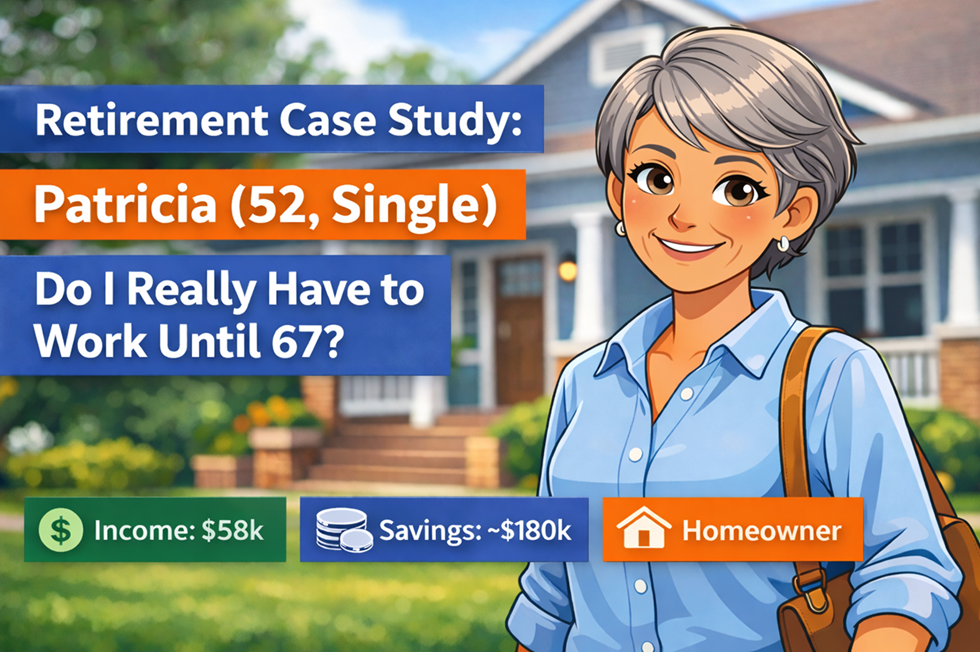
Patricia is 52 and works as a social worker in Louisville, KY. She’s single, owns her home, and has been saving consistently — just not aggressively.
She’s not trying to retire rich.
She just wants to retire comfortably and without running out of money.
Patricia’s Financial Snapshot
Income
- $58,000 per year
Savings (total ≈ $180,000)
- 401(k): $81,000
- Roth IRA: $36,000
- HSA: $9,000
- Taxable investments + cash: ~$54,000
Home
- Value: $280,000
- Mortgage balance: $110,000
- Estimated equity: $170,000
Social Security
- About $1,850/month at age 67
(~$22,200 per year)
What Patricia Wants to Know
Patricia came in with three simple questions:
- Can I retire before 67?
- How much can I safely spend?
- What’s the “smart” retirement age for someone like me?
To answer that, we ran multiple scenarios — not just best-case, but realistic and worst-case too.
The Planning Assumptions (No Funny Business)
To keep things honest, we used conservative assumptions:
- Savings rate: 10% of income ($5,800/year)
- Target retirement spending: $45,000/year (today’s dollars)
- Investment returns (after inflation):
- Conservative: 3.0%
- Expected: 4.5%
- Strong markets: 6.0%
- Longevity: Age 90
- Healthcare: Medicare starts at 65
- Housing: She stays in her home
So… When Can Patricia Retire?
Here’s the short answer:
👉 She has options — but some are stronger than others.
Retirement Age Comparison
| Retire At | Realistic Spending | Big Risks | Chance of Success |
|---|---|---|---|
| 60 | $38k–$42k | Market downturns, healthcare | 55%–72% |
| 62 | $40k–$46k | Pre-Medicare costs | 65%–82% |
| 65 | $42k–$50k | Manageable | 78%–93% |
| 67 | $45k–$54k | Very low | 85%–96% |
What These Numbers Really Mean
Retiring at 60
This is the dream — and also the riskiest option.
- Spending has to stay tight
- Markets have to cooperate
- Little room for surprises
This is a stretch goal, not a base plan.
Retiring at 62
This is where many people land emotionally.
It can work — if:
- Spending stays under control
- Social Security is delayed
- Markets don’t hit a major early crash
Still fragile, but possible.
Retiring at 65 (The Sweet Spot)
This is where things click.
- Medicare eliminates a huge expense
- Savings have more time to grow
- Social Security becomes a choice, not a lifeline
For Patricia, this is the best balance of freedom and safety.
Retiring at 67
The safest plan mathematically.
- Highest guaranteed income
- Strongest protection against longevity risk
- Allows higher spending or legacy planning
But — and this matters — she doesn’t have to wait this long to be okay.
The Big Tradeoffs (Plain English)
- Earlier retirement = lower spending or higher risk
- Delaying Social Security is one of the best “returns” available
- Home equity is a safety valve, even if never used
- Roth and HSA accounts provide flexibility — but only if funded
The Recommended Game Plan
For Patricia, here’s the smart approach:
- Base plan: Retire at 65
- Flex option: Retire at 62 if markets cooperate
- Social Security: Target 67–70
- Spending goal: ~$45,000/year
This creates options, not pressure.
Three Smart Moves That Improve the Plan Fast
- Gradually increase savings to 15%
Even over a few years, this can add $70k–$90k by age 65. - Plan early retirement as optional, not mandatory
Flexibility beats rigid dates every time. - Decide Social Security timing before retiring
Emotional decisions during market downturns are expensive.
Final Thoughts
Patricia isn’t behind.
She just needed clarity.
Retirement planning isn’t about picking one magic age — it’s about building choices. With a solid plan and a little flexibility, Patricia can retire on her terms — not Social Security’s.
Important Disclosures: Retirement “R” Us, a registered retirement planning advisor, provides this information for educational purposes only. It is not intended to offer personalized investment advice or suggest that any discussed securities or services are suitable for any specific investor. Readers should not rely solely on the information provided here when making investment decisions.
- Investing carries risks, including the potential loss of principal. No investment strategy can ensure a profit or protect against loss during market downturns.
- Past performance is not indicative of future results.
- The opinions shared are not meant to serve as investment advice or to predict future performance.
- While we believe the information provided is reliable, we do not guarantee its accuracy or completeness.
- This content is for educational purposes only and is not intended as personalized advice or a guarantee of achieving specific results. Consult your tax and financial advisors before implementing any discussed strategies.
- Everyone’s retirement circumstances, especially when it comes to health insurance and health care, are unique.
- Retirement “R” Us does not provide tax or legal advice. Please consult your tax advisor or attorney for advice tailored to your situation.
Legal Disclaimer: The information provided on this website is for general informational purposes only and is not intended to be legal advice. While we strive to ensure the accuracy and completeness of the information, we make no guarantees regarding its accuracy, completeness, or timeliness. The content is provided “as is” without any warranties of any kind, either express or implied.
Use of this website does not create an attorney-client relationship between the user and the website owner or any of its contributors. Users should not act upon the information provided without seeking professional legal counsel. Any reliance on the information provided is solely at the user’s own risk.
We are not responsible for any errors or omissions, or for any actions taken based on the information provided on this website. Links to third-party websites are provided for convenience only and do not constitute an endorsement or approval of their content. We are not liable for any damages arising from the use of or reliance on the information provided on this website or any linked third-party websites.
By using this website, you agree to the terms of this legal disclaimer. If you do not agree with these terms, please do not use this website.
Leave a Reply